
This journal discusses experiences in Japan broadly. IIT’s own program is fee-based; specific opportunities and support are confirmed with the team.
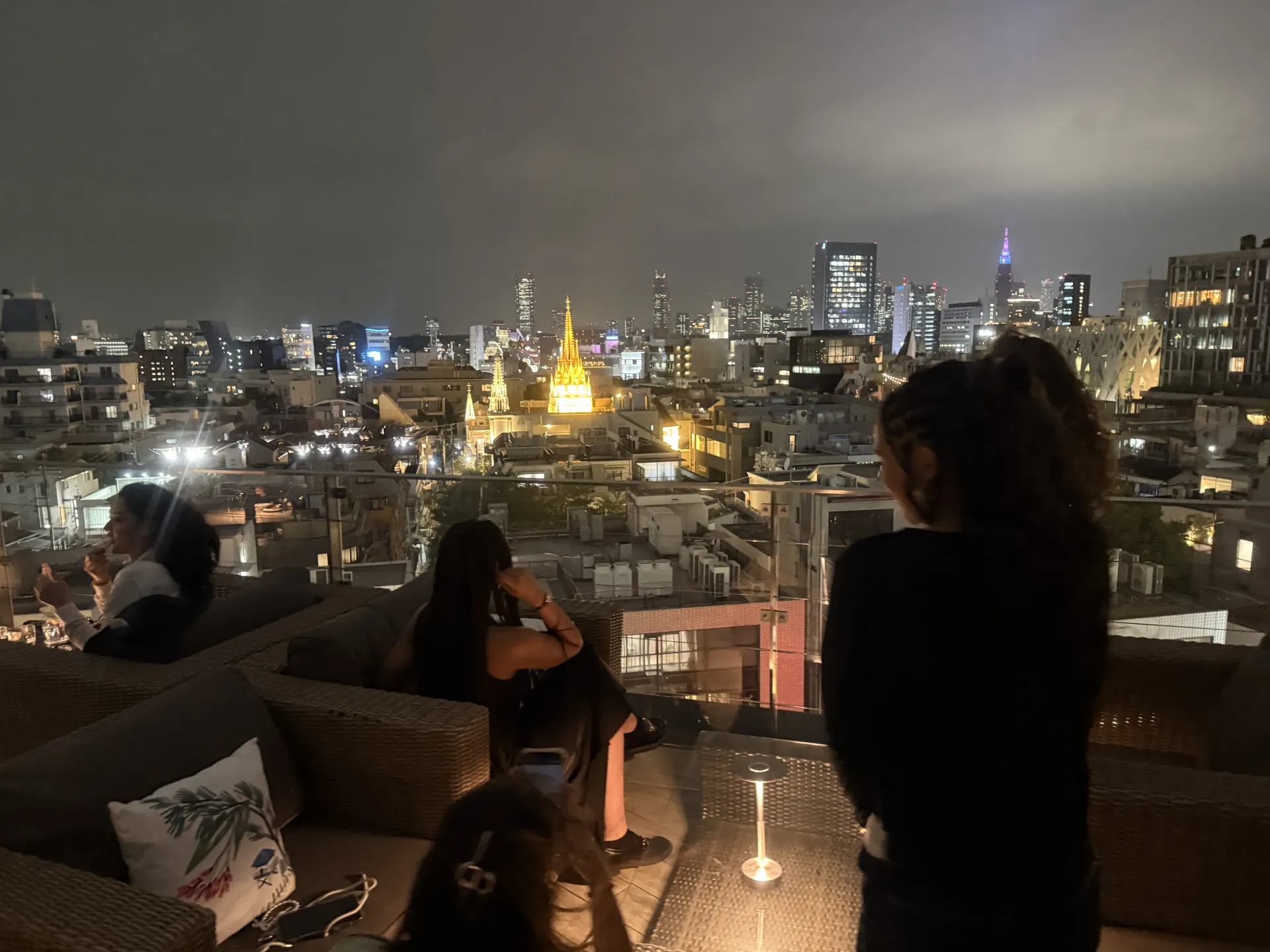
The Coexistence of New and Old in Tokyo
Tokyo is often described as one of the most futuristic cities in the world. Its towering skyscrapers, crowded train stations, digital screens, convenience stores, and cutting-edge technology can make it feel like a city from the future.
But look closely, and you will notice something surprising.
A centuries-old shrine might be hidden between modern office buildings. Traditional Japanese houses can sit next to a glass apartment tower. A quiet temple may be just a few minutes away from one of the world’s busiest shopping districts.
This is one of the things that makes Tokyo so fascinating: the old and new don’t simply exist side by side—they constantly interact with each other.
From shrines to skyscrapers, Tokyo has developed a unique way of preserving its past while continuing to reinvent itself.
Tokyo Is a City of Layers
One of the easiest ways to understand Tokyo is to think of it as a city built in layers.
There is the Tokyo of the Edo period, when the city was known as Edo, the Tokyo that developed during Japan’s modernization in the late 19th and early 20th centuries. and the postwar Tokyo rebuilt after enormous destruction. Finally, there is today’s Tokyo, filled with technology companies, global businesses, creative industries, and modern architecture.
You can sometimes see all of these periods within the same neighborhood.
Walk down a street and you might pass a traditional wooden house, a neighborhood shrine, a 24-hour convenience store, a modern café, and a high-rise apartment building—all within a few minutes.
Instead of completely replacing what came before, Tokyo often builds around it.
That creates a cityscape that can feel slightly contradictory at first, but incredibly natural once you become familiar with it.
Shrines Hidden Among Skyscrapers
One of the clearest examples of old and new in Tokyo is the city’s many shrines.
Some are located in large, peaceful grounds surrounded by trees. Others are surprisingly small, tucked between buildings or hidden behind busy streets.
Take Atago Shrine , for example. Located in central Tokyo, the shrine is famous for its steep staircase known as the “Stone Steps to Success.” At the top, the atmosphere feels dramatically different from the surrounding business district.
Another example is Hie Shrine in Akasaka . Modern office buildings surround the area, yet visitors can walk through traditional torii gates and experience a distinctly Japanese religious space.
This contrast is not unusual in Tokyo.
You don’t necessarily have to travel outside the city to experience traditional Japan. Sometimes, you only need to turn down a side street.
Traditional Neighborhoods in a Modern City
Tokyo’s neighborhoods also demonstrate how the past can survive within an incredibly modern urban environment.
Areas such as Yanaka are known for their traditional atmosphere, temples, narrow streets, small shops, and older houses.
Walking through Yanaka can feel very different from walking through Shibuya or Marunouchi.
There are fewer enormous commercial buildings and more small businesses that have served local residents for generations.
Yet even these neighborhoods are changing.
New cafés, galleries, creative businesses, and renovated buildings have appeared alongside traditional shops and homes. Rather than freezing the neighborhood in the past, this creates another example of Tokyo’s ability to adapt.
The result is not completely traditional and not completely modern.
It is something in between.
Tokyo’s Skyscrapers Don’t Erase Its History
When people think about Tokyo’s modern architecture, they often picture areas such as Shinjuku, Shibuya, Roppongi, or Marunouchi.
These areas are filled with skyscrapers, shopping centers, luxury hotels, technology companies, and international brands.
But even here, history remains visible.
Tokyo Station’s red-brick Marunouchi building, for example, represents a very different era of Japanese modernization. Nearby, the Imperial Palace preserves a much older connection to Japan’s political and cultural history.
The surrounding skyscrapers haven’t eliminated this history.
Instead, they have become part of the same landscape.
This is an important difference between simply preserving history and allowing history to remain part of everyday life.
Old Doesn’t Always Mean “Untouched”
One thing I have learned from living in Japan is that preserving something doesn’t necessarily mean leaving it exactly as it was.
Japanese culture has a long history of rebuilding, repairing, adapting, and recreating traditional structures.
One famous example is Ise Jingu, where major shrine buildings are traditionally rebuilt at regular intervals. The physical structure may be new, but the rituals, craftsmanship, and traditions continue.
This idea helps explain something about Tokyo as well.
A building, shop, or neighborhood doesn’t necessarily need to remain physically unchanged for its cultural meaning to survive.
Tradition can be maintained through practices, craftsmanship, food, festivals, language, architecture, and community.
In that sense, Tokyo’s relationship with the past is often more about continuity than preservation .
Technology and Tradition Can Work Together
Tokyo is also a good example of how technology and tradition don’t necessarily have to compete.
You might see people using smartphones to navigate their way to a centuries-old temple. A traditional restaurant may accept digital payments. A shrine festival might be promoted through social media. A centuries-old craft business may use modern e-commerce to reach customers around the world.
These combinations can seem strange if you think of tradition and technology as opposites.
But in Tokyo, they often coexist naturally.
Modern technology can actually help traditional businesses and cultural practices survive.
A small family-run restaurant can reach international visitors through Instagram. Traditional craftsman can sell products online. Local festivals can attract younger generations through digital promotion.
The modern world doesn’t always destroy tradition.
Sometimes, it gives tradition new ways to survive.
The Contrast Is Everywhere
One of my favorite things about Tokyo is that you don’t always need to visit a famous tourist attraction to experience this contrast.
It can happen during an ordinary walk.
You might leave a modern train station, walk past a convenience store, turn onto a quiet residential street, and suddenly find a small Buddhist temple.
A few blocks later, you might be standing beneath a giant digital billboard.
Then you turn another corner and discover a tiny family-owned restaurant that has been operating for decades.
This unpredictability makes exploring Tokyo especially rewarding.
The city doesn’t always announce its history.
Sometimes you have to look for it.
Why Tokyo Feels Different From Other Global Cities
Many major cities around the world have historic areas surrounded by modern development.
But Tokyo’s relationship between old and new can feel particularly intense because of the city’s enormous scale and constant redevelopment.
Tokyo is not a museum.
It is a living city.
Buildings are demolished and rebuilt. Businesses open and close. Neighborhoods change. Train stations are renovated. New skyscrapers appear.
At the same time, festivals continue, shrines remain active, traditional restaurants serve the same dishes, and local communities maintain customs that have existed for generations.
The city is constantly moving forward without necessarily abandoning everything behind it.
That tension is part of Tokyo’s identity.
You Can See It in Everyday Life
The coexistence of old and new isn’t limited to architecture.
You can see it in everyday Japanese life.
A person might wear a modern business suit to work and a yukata at a summer festival.
Someone might live in a high-tech apartment but participate in a neighborhood matsuri.
A restaurant might use modern kitchen equipment while preparing recipes that have been passed down through generations.
A young entrepreneur might work from a modern coworking space while visiting a shrine before an important business decision.
These combinations are not unusual.
They are part of what makes contemporary Japanese culture so interesting.
Tokyo Doesn’t Have to Choose
Perhaps the biggest lesson from Tokyo is that a city doesn’t necessarily have to choose between tradition and modernity.
It can have both; building skyscrapers while protecting historic sites, embracing new technology while maintaining traditional craftsmanship, creating futuristic train stations while keeping neighborhood festivals alive and attracting international companies while supporting small family-owned businesses.
Of course, this coexistence isn’t always perfect. Rapid redevelopment can threaten older buildings, local businesses, and neighborhood character. Preserving history in one of the world’s most expensive and densely developed cities is a constant challenge.
But the fact that these conversations exist shows how important the past remains.
Look Beyond the Tourist Attractions
If you’re visiting Tokyo, don’t only look for the newest and biggest attractions.
Visit the skyscrapers, of course.
Experience Shibuya Crossing. Explore Shinjuku. See Tokyo from above.
But also slow down.
Walk through Yanaka. Visit a neighborhood shrine. Explore older shopping streets. Look for small temples between buildings. Take a side street instead of following the main tourist route.
That’s when you start seeing another side of Tokyo.
The most interesting parts of the city are sometimes found where the modern world suddenly gives way to something much older.
From Shrines to Skyscrapers
Tokyo’s greatest strength may not be its technology, its architecture, or even its famous attractions.
It may be its ability to combine seemingly opposite things.
Old and new.
Traditional and modern.
Local and global.
Quiet and chaotic.
Historical and futuristic.
These contrasts don’t always make Tokyo easy to understand.
But they make it fascinating.
From a tiny shrine hidden between office buildings to a centuries-old neighborhood surrounded by skyscrapers, Tokyo constantly reminds you that the future doesn’t necessarily require forgetting the past.
Maybe that’s what makes Tokyo feel so uniquely Tokyo: it isn’t a city that chose between shrines and skyscrapers. It decided to keep both.
Frequently asked questions
Where can you see old and new Tokyo together?
Areas such as Asakusa (with views of Tokyo Skytree), Meiji Shrine next to Harajuku and Shibuya, and small shrines between office towers in Marunouchi and Shinjuku.
Are shrines and temples the same in Japan?
No. Shrines (jinja) belong to Shinto and usually have a torii gate; temples (tera) are Buddhist. Many people visit both.
Can visitors enter shrines in Tokyo?
Yes, most shrines are open to everyone. Bow at the gate, rinse your hands at the water basin and be quiet and respectful.